
2025 Olivier Chesneau prize for the best PhD thesis in HRA to Dr. Violetta Gamez Rosas and Dr. Manon Lallement
Publié le 27 avril 2026
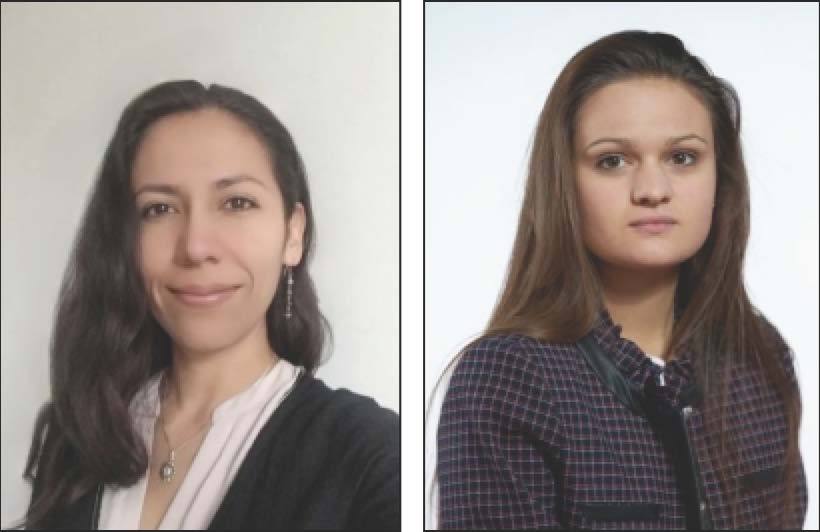
Figure 1: 2025 Chesneau prize: Dr. Violetta Gamez Rosas and Dr. Manon Lallement
Dr. Violetta Gamez Rosas is an expert in AGN dust studies conducted at the highest spatial resolutions available today. She has convinced the jury with her pioneering study of the nearby galaxy NGC 1068, which combines not only data obtained with the instruments MATISSE and GRAVITY on ESO’s Very Large Telescope Interferometer (VLTI), but also with the ALMA millimeter interferometer. Her work, conducted as part of her PhD project carried out at the University of Leiden in the Netherlands and as part of the international MATISSE AGN consortium, not only combines several techniques and bandwidths but also transitions from simple models to full image reconstruction. Through this exhaustive study, she shed new light on one of the best-studied objects in the extragalactic sky. Her study illustrates how the enhanced sensitivity of the novel generation of near- and mid-infrared interferometers opens a new, highly promising observational window for extragalactic astrophysics.
Dr. Manon Lallement impressed the jury with her double expertise in instrumentation and astrophysical applications using cutting-edge technologies. She made several major contributions to the field of astrophotonics, notably optimizing a high-throughput integrated-optics beam combiner at visible wavelengths and demonstrating it on-sky with the FIRST instrument at the Subaru Telescope on Mauna Kea. In parallel, she explored the novel Photonics Lantern technology and integrated it into FIRST, providing an effective way to feed its spectrograph. In only three years as a PhD student at LESIA at the Paris Observatory, in collaboration with IPAG at the University of Grenoble and the SUBARU observatory, she has introduced a new observing mode at one of the major optical astronomical observatories worldwide. In addition, using Hα line observations with FIRST, she led a very compelling study of warm ionized gas surrounding a massive star. The jury particularly valued Dr. Manon Lallement’s ability to lead advanced high-angular-resolution R&D and forefront astrophysical analyses.
The Olivier Chesneau prize is awarded jointly every second year by the European Southern Observatory (ESO) and the Observatoire de la Côte d’Azur (OCA) for outstanding work of young researchers in the field of High Angular Resolution Astrophysics. It commemorates the work of Olivier Chesneau (1974-2014) and his extraordinary contributions both to instrumentation and astrophysics with High Angular Resolution techniques. The jury wishes to highlight the outstanding quality of all candidates this year, which underscores the high scientific potential of this rapidly developing field, across instrumentation and multiple domains of galactic and extragalactic astrophysics.